


Introduction
The manufacturing industry is going through a major transformation. By 2026, success in the manufacturing industry is no longer just about machines, labor, or scale. It is about smart manufacturing, where connected systems, real-time data, and analytics help manufacturers make faster, smarter business decisions.
Manufacturers today are under a lot of pressure. They’re dealing with rising operational costs, supply chains that are just unpredictable, machines going down at the worst possible times, and the need to deliver faster with better quality. And you can’t just rely on the old processes and disconnected systems anymore.
This is where smart manufacturing really starts to shake things up.
What Is Smart Manufacturing?
Smart manufacturing is all about using digital tools, real-time data, and analytics together with AI to make manufacturing operations work better all the way from start to finish.
It’s about:
- Being able to monitor production in real-time
- Having all your factory systems talking to each other
- Making decisions before they become problems
- Using data to keep your factory running smoothly and efficiently
So in simple terms, smart manufacturing takes all the raw data from your factory and turns it into real business insights you can actually use.
Why Smart Manufacturing Is One of the Top Trends in 2026
Manual Processes Are Just Holding You Back
A lot of manufacturing units are still using spreadsheets and manual reporting to track their production, inventory, and quality. This just causes delays, mistakes, and lack of visibility.
But digital transformation lets you ditch those inefficiencies and scale up faster.
Real-Time Visibility Is a Total Game-Changer
Manufacturing leaders need answers right now to questions like:
- What machines are underperforming right this minute?
- Where are the bottlenecks in the production line?
- Which shift or line is causing the quality issues?
Real-time dashboards and analytics make this kind of visibility possible.
Controlling Costs and Margin Pressure
With raw materials and energy getting more expensive all the time, manufacturers have to be really careful about:
- Waste and scrap
- Inventory and carrying costs
- How efficient your machines are
Data-driven manufacturing gives you the tools to control your costs better and keep your margins healthy.
The Role of ERP in Modern Manufacturing
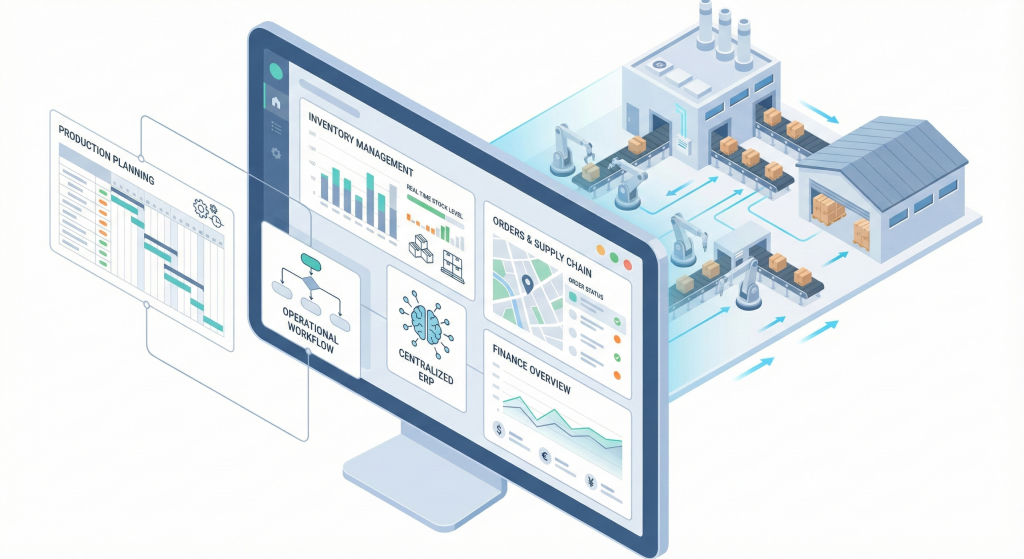
A modern manufacturing ERP system ties together the key parts of your operation like:
- Production planning and scheduling
- Inventory and warehouse management
- Quality control
- Finance and compliance
But ERP on its own is just not enough – you need analytics and real-time insights to really get the best out of it.
Manufacturing Analytics: From Reports to Real Insights
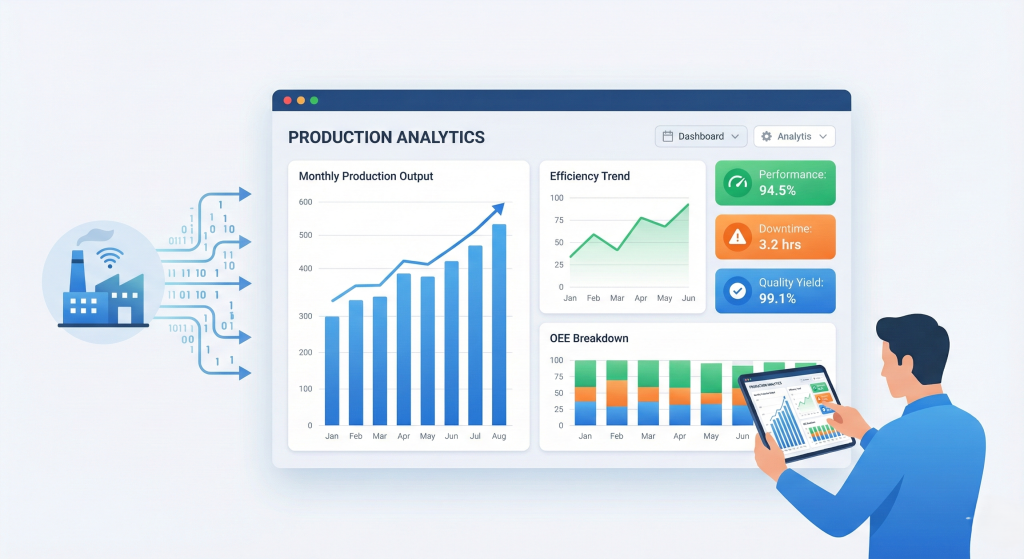
Traditional reports just show you what happened in the past.
Advanced analytics tells you why it happened and what you should do next.
With manufacturing analytics, businesses can:
- Find out where the bottlenecks are right now
- Improve their demand forecasting accuracy
- Keep an eye on machine performance all the time
- Make decisions faster and with more confidence
Moving from just reporting on what happened to actually using the data to shape what happens next is what’s driving analytics adoption in manufacturing.
How AI Is Transforming Factory Operations
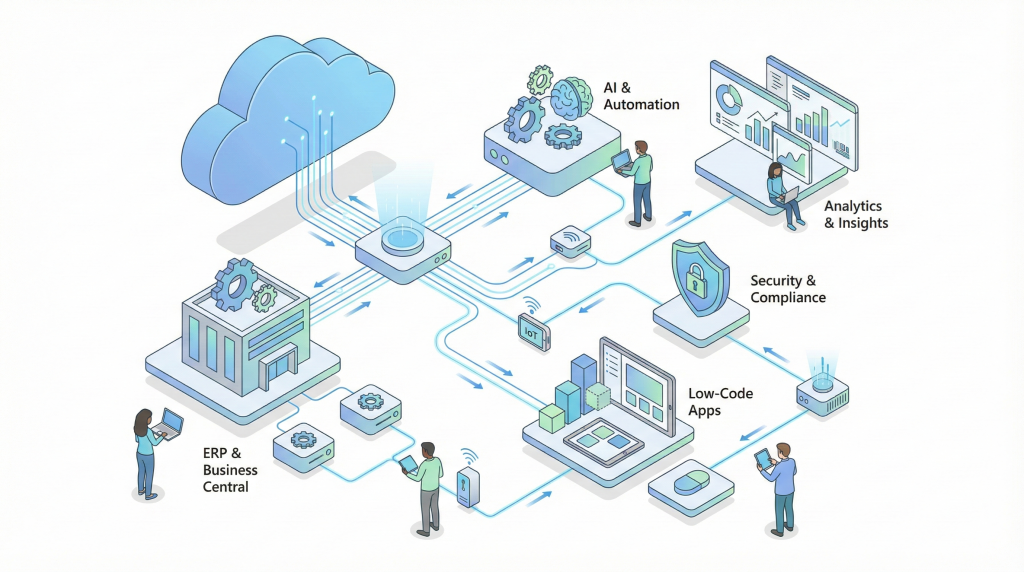
Artificial intelligence is helping manufacturers to go from just fixing problems as they happen to actually predicting and preventing them.
AI lets you:
- Do predictive maintenance to stop machines from going down
- Catch quality issues early
- Make smarter demand forecasts
- Plan your resources more effectively
Data platforms like Microsoft Fabric help manufacturers bring together ERP, IoT, and analytics data in one place, making it easier and faster to adopt AI.
The Key Benefits of Smart Manufacturing
Companies that adopt smart manufacturing see improvements in:
- Less machine downtime
- Higher production efficiency
- Better inventory accuracy
- Lower operational costs
- Faster decision making
And its builds a whole culture of data-driven decision making.
How Incite Gravity Helps Manufacturing Businesses Modernize
Incite Gravity partners with manufacturing businesses to design and implement digital solutions aligned with real operational needs.
Our Manufacturing-Focused Capabilities
- Manufacturing ERP implementation and optimization
- Production, inventory, and quality analytics
- Real-time dashboards and KPI monitoring
- AI-driven operational insights
- Secure and scalable data platforms
Our approach is practical, industry-focused, and results-driven.
When Should a Manufacturing Company Start Digital Transformation and Smart Manufacturing?
Smart manufacturing is the right step if your business faces:
- Frequent production delays
- Limited visibility across plants or shifts
- Inventory mismatches
- Manual or slow reporting
- Rising operational costs
Early adoption helps manufacturers stay competitive and future-ready.
Final Thoughts
In 2026, manufacturing success is defined by how effectively data is used, not just by production capacity.
Smart manufacturing enables businesses to:
- Improve operational efficiency
- Reduce risks and downtime
- Respond faster to market changes
- Build scalable and resilient operations
The future of manufacturing is intelligent, connected, and data-driven.
Ready to Transform Your Manufacturing Operations?
Incite Gravity helps manufacturers turn data into measurable business outcomes.
Build smarter factories. Make faster decisions. Stay competitive.


